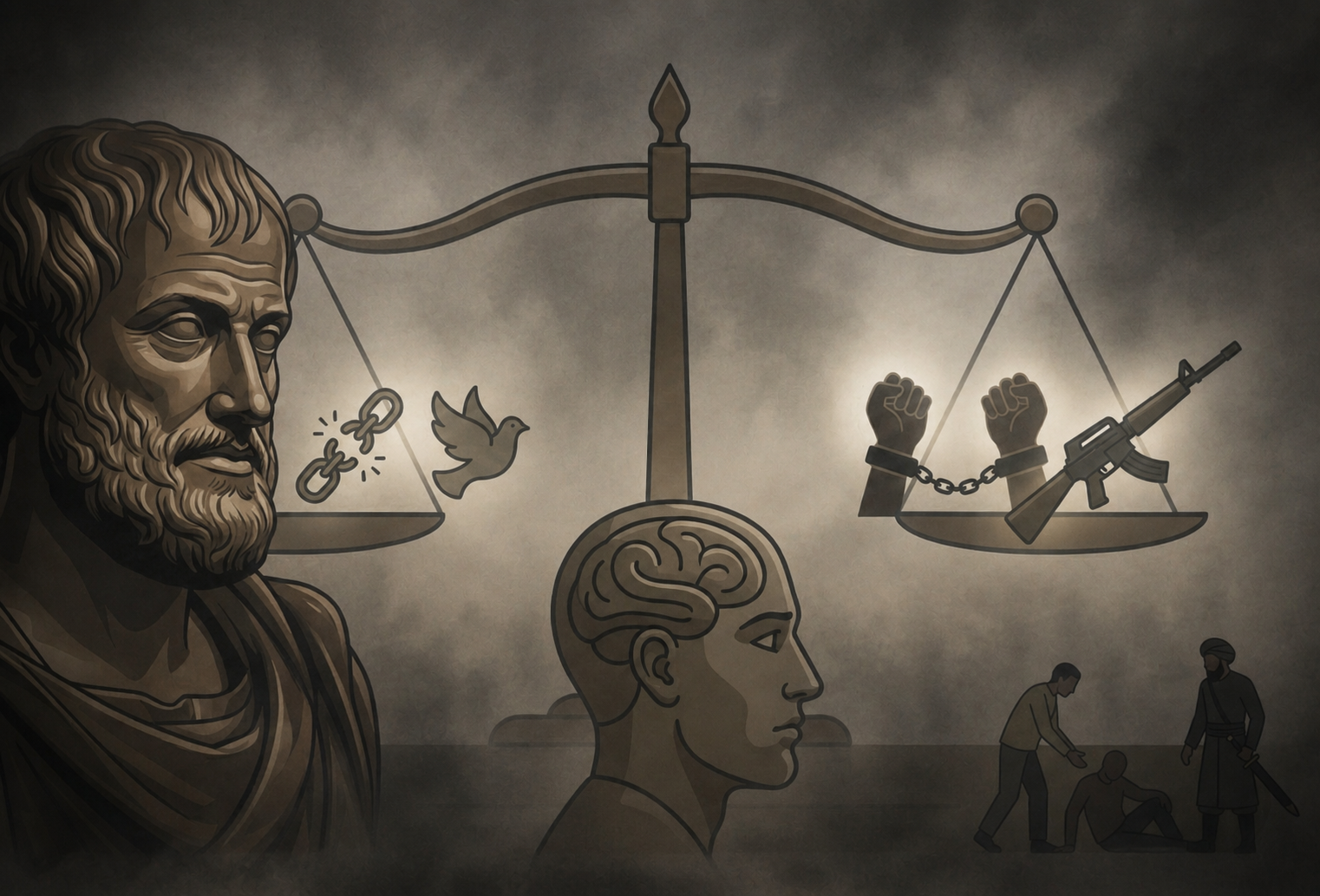
Social ostracism, and why does an individual or a group of individuals fear becoming ostracized? And does the ostracizer have the right to ostracize? How did they obtain this right? Is it a genuine right, or merely an agreement upon a certain pattern among a number of individuals, with their number itself creating the legitimacy of ostracism? And can a single individual ostracize a group or society in general?
Historically returning to the origins of ostracism, the first person to practice it was the famous Athenian reformer Cleisthenes in 508 BC, as a mechanism to protect the emerging democracy. Ostracism was an annual ritual in which people gathered to consider whether there was someone deserving of ostracism. Among the first people to be ostracized were Hipparchus and Aristides, both of whom were politicians; this means they were not ostracized because of religion, race, language, or appearance.
Ostracism is one form of social punishment that seeks to eliminate an individual or a group because of some difference, or a collection of differences.
As for the fear of ostracism, humans evolutionarily understood that it is difficult to live alone; because in the past, the punishment of ostracism required exiling the person outside the city or place where their group existed, thereby losing the essentials of living, such as safety, food, drink, and shelter. This concept became deeply rooted and remained until our present time, even though humans are now more capable of living alone than they were before. Yet this fear of solitude remained attached to them throughout the ages, and even evolved into a fear of isolation and a feeling of not belonging.
As for speaking about the ostracizer's legitimacy in their action, this question is fundamentally incorrect; because the basis of this act is the ability to carry it out, not legitimacy. However, the question becomes valid again if we speak from a moral perspective. Looking at ostracism in terms of its benefit and harm, we find that it lies in a gray area; it can be moral if it aims to protect the ostracizing group from harm, and it can be immoral if judgment is exercised through force or arbitrariness.
Just as a group can ostracize a person, a person can also ostracize a group, but in this case the burden falls upon the ostracizer; because they will be forced to exist independently without relying on society or the group. The matter is not greatly difficult, rather it is possible, and it becomes easier the further we progress through time. What we are today does not resemble what the world once was; we are no longer as interconnected as our ancestors were. Today, an individual can live in a place for months without knowing the names of their neighbors or even those who share their residence. In my view, this is one of the best things modernity has brought.