
Operating systems : internals and design principles
763 pages : 24 cm Intended for use in a one- or two-semester undergraduate course in operating systems for computer science, computer engineering, and electrical engineering majors Operating Systems: Internals and Design Principles provides a comprehensive and unified introduction to operating systems topics. Stallings emphasizes both design issues and fundamental principles in contemporary systems and gives readers a solid understanding of the key structures and mechanisms of operating systems. He discusses design trade-offs and the practical decisions affecting design, performance and security. The book illustrates and reinforces design concepts and ties them to real-world design choices through the use of case studies in Linux, UNIX, Android, and Windows 8. Teaching and Learning Experience This program presents a better teaching and learning experience-for you and your students. It will help: *Illustrate Concepts with Running Case Studies: To illustrate the concepts and to tie them to real-world design choices that must be made, four operating systems serve as running examples. *Easily Integrate Projects in your Course: This book provides an unparalleled degree of support for including a projects component in the course. *Keep Your Course Current with Updated Technical Content: This edition covers the latest trends and developments in operating systems. *Provide Extensive Support Material to Instructors and Students: Student and instructor resources are available to expand on the topics presented in the text "Global edition" -- Cover Includes bibliographical references (pages 715-727) and index Chapter 0. Guide for Readers and Instructors ---- PART ONE: BACKGROUND. Chapter 1. Computer System Overview --- Chapter 2. Operating System Overview ---- PART TWO: PROCESSES. Chapter 3. Process Description and Control --- Chapter 4. Threads --- Chapter 5. Concurrency: Mutual Exclusion and Synchronization --- Chapter 6. Concurrency: Deadlock and Starvation ---- PART THREE: MEMORY. Chapter 7. Memory Management --- Chapter 8. Virtual Memory ---- PART FOUR: SCHEDULING. Chapter 9. Uniprocessor Scheduling --- Chapter 10. Multiprocessor and Real-Time Scheduling ---- PART FIVE: INPUT/OUTPUT AND FILES. Chapter 11. I/O Management and Disk Scheduling --- Chapter 12. File Management ---- PART SIX: ADVANCED TOPICS. Chapter 13. Embedded Operating Systems --- Chapter 14. Virtual Machines --- Chapter 15. Operating System Security --- Chapter 16. Distributed Processing, Client/Server, and Clusters ---- Appendices
physical copy
More Books

Test-driven development : by example
Clean code that works--now. This is the seeming contradiction
that lies behind much of the pain of programming. Test-driven
development replies to this contradiction with a paradox--test the
program before you writ...

ERIC ED481397: Your Reading: An Annotated Booklist for Middle School and Junior High. 11th Edition. NCTE Bibliography Series.
Organized around the theme of "challenges," the 11th edition of "Your Reading" offers annotations of more than 1,200 books for young adults. Intended for teachers, librarians, parents, and students, this booklist pres...

أسس علم النفس الإجتماعي
أسس علم النفس الإجتماعيتأليف : أحمد محمد الزعبيالناشر : دار زهران للنشر والتوزيع الطبعة الأولى سنة النشر : 2013

An Introduction To Computers
Because of the rapid growth and wide use of computers, in practically all fields of man's activity, there is a need for students in all specialities to have a concise, yet thorough presentation of computer theory, des...

The advanced reading-writing connection
viii, 472 pages : 24 cm The Advanced Reading-Writing Connection will help you become a more effective reader and writer. You will learn, in a nutshell, that good readers (1) recognize a main point and (2) recognize th...
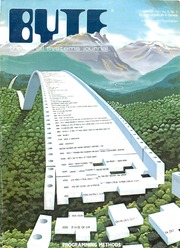
Byte Magazine Volume 06 Number 03 - Programming Methods
Features
p.20 Structured Programming and Structured Flowcharts
[author Gregg Williams]
A technique that makes programs easier to write, understand, fix, and change.
p.36 Build the Disk-80: Memory Expansion and Floppy-...