
Images Of Geometric Solids
We now come to another title in the Little Mathematics Library, this one is titled Images of Geometric Solids by N. M. Beskin Drawing a plane figure is not geometrically difficult because the image drawn is either an exact copy of the original or a similar figure, e.g. the drawing of a circle looks like the original circle. Drawing geometric solids is quite a different matter. Unfortunately, there are no "spatial pencils" which can trace an object in the air. Such a pencil would "draw" a cube by tracing along its edges. Hence, we have to sketch a cube on paper with an ordinary pencil. A plane image will never be an exact copy of a solid and, therefore, a certain routine ought to be followed in drawing a solid that would create an image of the original in the best way.What is the book about. Descriptive geometry embraces somany methods that even a brief account would make up a rather thick volume. Therefore, we shall discuss just one of these methods, so as to enable the reader to make stereometric drawings and solve the respective problems...This book presents a geometric theory of constructingstereometric drawings. Having mastered this theory, a reader will be able to make the drawings himself rather than have to stick to the few sample ones.The first chapter presents the theory, the second one is devotedto its applications (drawing of a cube, a cone, a cylinder, etc.),and the third one describes a method of plotting the points of animage if their coordinates are known.It is these strategies and routine that this book discusses. Though many things are possible with modern computer programs, but the logic may not be known to people who are using them.The book was translated from the Russian by Valery Barvashov and was first published by Mir in 1985. You can get the book here. All credits to the original uploader.ContentsChapter 1. Theory1. The subject matter of the Theory of images ............................72. Requirements of an image. ....... ..........................................73. What is the book about ........................................................84. The method of parallel projection ..........................................85. A comment on notation ........ ............................................106. Properties of parallel projections ..........................................117. Free images ................................... ..................................138. Constructing the images of plane figures .............................. ..149. Some examples of representing polygons ................................1510. The image of a circle ..........................................................1611. Another viewpoint of constructing the images of plane figures ... .1712. Pohlke-Schwartz theorem. ...... .........................................2013. Representing geometric solids ..... ....... .................................2614. Reversibility of an image .....................................................2815. Specified images ........ ....... ......... ......... ...............................30Chapter 2. Practical Exercises16. Cross sections of polyhedrons ............. ................................3217. Metric problems .............................................................. ..3518. Solids of revolution ......... ........ ...... ...... ........................3719. The image of a plane.. ..... ...... ..... .............................4220. Inscribed and circumscribed solids. ....................................4321. Some drawing conventions .................... .............................4622. Drawing obvious images .. ..... ..........................................47Chapter 3. A computation method23. Theory..... ............. ................. ... ..... ....... ................... ...... 5024. Application of the computation method .................................53Appendix 1. Expression of the Coordinates of the Image Points Using the Coordinates of the Original Points25. A characteristic property of a linear homogeneous function .......6226. Formulas for the coordinates of the points of an image .............64Appendix 2. The Ellipse27. Uniform compression .......... .......... .......................... .......... .6728. The definition of an ellipse ..................................................7029. Some properties of ellipse ...................................................7030. The ellipse as the projection of a circle ..................................7331. The cross sections of a circular cylinder .................................753;2. Some constructions connected with the ellipse .........................76All credits to the original uploader
Basılı kopya
Diğer Kitaplar

A tricolor cartograph
Book digitized by Google from the library of the University of California and uploaded to the Internet Archive by user tpb. vi leaves, 109 pages : 28 cm "COO-1469-0102." Ph. D. University of Illinois Vita Includes bib...

International Journal of Modern Engineering Research
International Journal of Modern Engineering Research (IJMER) is Peer reviewed, online Journal. It serves as an international archival forum of scholarly research related to engineering and science education.Internatio...

Mathematics Of Accounting Third Edition
Mathematics Of Accounting Third Edition — Curtis,Arthur B., Cooper,John H.

Hdh kitb al-Jallayn f tafsr al-Qurn al-am
"Muaaan bi-marifat multazimih ... Rawn ibn asan ibn Al al-ifnw." ab ajar This work is an addendum to, and amplification of, al-Maalls Tafsr al-Qurn, by al-Suy Work known also under title: Tafsr al-Jallayn 26
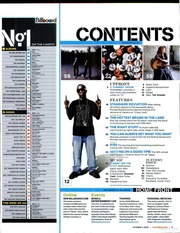
Billboard
In its 114th year, Billboard remains the world's premier weekly music publication and a diverse digital, events, brand, content and data licensing platform. Billboard publishes the most trusted charts and offers unriv...

Islamic Books
Islamic Books PDF download PDF files from right side of pagebooks list100 Minutes with the Quran.pdf100 Stories about Hadhrat Uthmaan.pdf100 Stories of Hadhrat Abdullaah bin masood.pdf100 Stories of hadhrat Faatimah.p...