
Nietzsche’s Last Twenty Two Notebooks: complete
Nietzsche’s Last Twenty Two Notebooks: complete / By Daniel Fidel Ferrer. Copyright©2021 Daniel Fidel Ferrer. All rights reserved. Attribution-NonCommercial-NoDerivs. Publisher: Kuhn von Verden Verlag. Pages 1-1043. New Translation and Notes by Daniel Fidel Ferrer. 1. Ontology. 2. Metaphysics. 3. Philosophy, German. 4.Thought and thinking. 5. Philosophy, Asian. 6. Philosophy, Indic. 7. Philosophy, Modern -- 20th century.8. Philosophy, Modern -- 19th century. 9. Practice (Philosophy). 10. Philosophy and civilization. 11. Postmodernism. 12. Nietzsche, Friedrich Wilhelm, 1844-1900.Many of the notes have never been translated into English before. Go inside the workshop of a great philosopher's mind and read these notes.Project started in summer of 2010. No one else has read this book for errors. As always, any errors, mistakes or oversights etc. are mine alone. Given a couple more years, I could improve this book. This is a philosophical translation and not a philological translation. If you want to get in to more philological details you must learn German (see Nietzschechannel plus many published books on the topics). Repeat: this is a philosophical translation. Martin Luther who did the famous early translation of the Bible into German wrote in a letter, “If anyone does not like my translation, they can ignore it… (September 15, 1530)”. You may be able to find other translations as well. Read the original German text for a more correct philological reading of Nietzsche’s thoughts. These are the 22 notebooks of Nietzsche’s last notebooks from 1886-1889. Nietzsche stopped writing entirely around 6th of January 1889. There are 1785 notes translated here. This group of notes translated in this book is not complete for the year 1886. There are at least two other notebooks that were done in the year 1886. Translation notes.
I have not tried to fix, polish-up, or clarify
Nietzsche’s unpublished writings. Some of the translator have really refined
Nietzsche’s ideas and positions. I have not “fixed” Nietzsche. I have not
dropped or added words or changed the wording to make Nietzsche’s position
clearer or stronger (others have done enough damage). Learn German and read the
texts in German – my best recommendation and advice to you the reader. There
are groups on the internet that work on all the details of translating
Nietzsche’s remarks. There are many nuances and shades of the meaning in
attempting to translate anyone’s language. Some words I could not translate
from German and French; and I left those few words in German, but more words in
French. I think most of the French texts are quotes that Nietzsche wrote down
from French authors that he was reading at the time he wrote these notes.
Reader beware. There
are many historical and philosophical allusions as in all of Nietzsche’s
philosophical writings and these notebooks are similar. Remember these are
“notebooks” and include lots of notes or jottings -- and these are neither
fragments nor polished drafts for publication. Nietzsche may have written these
notebooks from back to front and re-used various notebooks at a later time. In
the German text there are missing punctuations marks, missing quotation marks,
missing words, abbreviation of words, miss numbered section, working table of contents
for project books he wanted to publish, projects outlined, quotes without quote
marks. Sometimes there are even personal notes to himself, for example,
“Evening dress warm!” [Autumn 1888 21 [#5]. Some of the published German texts
include ‘missing letters and missing words’ filled in by the German language
editors to help understand and polish these actual incomplete notes. Check the
published German texts if you have any questions. The most famous of these
single personal notes is when Jacques Derrida (1930-2004) (Éperons: les
styles de Nietzsche, 1978) writes about one note written by Nietzsche,
where Nietzsche wrote, “I have forgotten my umbrella” (“ich habe meinen
Regenschirm vergessen”) [1881 12 = N V 7. Herbst Fall 1881] note [#62]. Enjoy reading and thinking with Nietzsche in his unpublished notes. Philosophical note on the content: I do not agree with
everything Nietzsche wrote -- and nor should you. Contrary to some
philosophers (for example, G.W.F. Hegel (1770-1831) and Edmund Husserl (1859-1938),
Nietzsche was not looking for disciples or followers. Nietzsche wrote, “One
repays a teacher badly if one always remains nothing but a pupil. Now I bid you
lose me and find yourselves; and only when you have all denied me will I return
to you. Verily, my brothers, with different eyes shall I then seek my lost
ones; with a different love shall I then love you.” (Thus Spoke Zarathustra.
1883-1885, Walter Kaufmann translation. The Portable Nietzsche, 1972,
page 190).
Basılı kopya
Diğer Kitaplar

Discovering computers 2018 : digital technology, data, and devices
1 volume (various pagings) : 28 cm Teach students to maximize their use of mobile devices, make the most of online tools for collaboration and communication, and fully utilize today's Internet capabilities with the la...

هنري كوربان تاريخ الفلسفه الاسلامية
كتب فلسفة2

History Of Mathematics Vol I
History Of Mathematics Vol I — Eugene Smith David.

The Holy Bible, containing the Old and New Testaments: ... 1800
The Holy Bible, containing the Old and New Testaments: ... 1800..Digitized from IA40315908-28.Previous issue: bim_eighteenth-century_the-holy-bible-containi_bible-english-authori_1772_2.
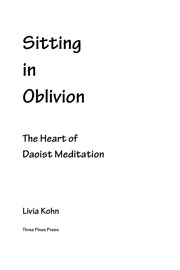
Sitting in Oblivion: The Heart of Daoist Meditation
Sitting in Oblivion: The Heart of Daoist Meditation by Livia Kohn is available here in PDF format. Description: This book is an expansion of Seven Steps to the Dao (1987). It outlines the history and intricacies of zu...

Philosophy, Psychology, Politics, And Economics
Philosophy Psychology Politics