
ECHELON - Surveillance Network (Collection)
"Duncan Campbell, a British investigative reporter, prepared a report on Echelon, the US-led satellite surveillance network."Misc. collection of documents regarding 1999 announcement of automated FVEY surveillance network; which relies on artificial intelligence technologies developed during the 1960's, pursuant to Project MAC. A brainchild of WWII OSRD cryptography & computing labs. Preceding Patriot Act America, the tone (as a matter of public opinion research,) is notable.Russia is reported to have developed a similar network, named 'SORM' (COPM Система оперативно розыскных мероприятий;) dual-use technology which could be a predecessor to, or also theoretically used for Customer Relationship Management purposes; {'wired1998'; no author listed.}(A similar system is likely in use by the U.S. DHS in demographics forecasting, and threat management; also known as Human Terrain System.)*The legal / political foundation for these systems was passage of the National Security Act, and subsequent 'secret' UKUSA agreement, between the five countries.----Campbell, Duncan. "Interception 2000: Development of surveillance technology and risk of abuse of economic information." Report to the Director General for Research of the European Parliament, Luxembourg (1999).Bogolikos, Nikos. "Development of surveillance technology and risk of abuse of economic information. Echelon report. PE 168.184/Vol 1/5 EN." (1999).Campbell, Duncan. "Development of surveillance technology and risk of abuse of economic information. The state of the art in communications Intelligence (COMINT) of automated processing for intelligence purposes of intercepted broadband multi-language leased or common carrier systems, and its applicability to COMINT targeting and selection, including speech recognition. PE 168.184/Vol 2/5." (1999).Leprevost, Frank. "Development of surveillance technology and risk of abuse of economic information. Encryption and cryptosystems in electronic surveillance: a survey of the technology assessment issues. PE 168.184/Vol 3/5/EN." (1999).Elliot, Chris. "Development of surveillance technology and risk of abuse of economic information. The legality of the interception of electronic communications: a concise survey of the principal legal issues and instruments under international, European and national law. Vol 4/5. PE 168.184." (1999).Boqolikos, Nikos. "Development of surveillance technology and risk of abuse of economic information. The perception of economic risks arising from the potential vulnerability of electronic commercial media to interception. Vol 5/5. PE 168.184." (1999).---- Campbell, Duncan. Development of Surveillance Technology and Risk of Abuse of Economic Information: An Appraisal of Technologies for Political Control. Interception Capabilities 2000: Report to the Director General for Research of the European Parliament (Scientific and Technical Option Assessment Programme Office) on the Development of Surveillance Technology and Risk of Abuse of Economic Information. European Parliament, Directorate General for Research, 1999.----Wired News [magazine] (various) 1998-1999.----Андреев, Б. В., and Е. А. Вагонова. "Право и Интернет." Москва (2001).[Andreev, B. V., and E. A. Vagonova. "Law and the Internet." Moscow (2001).] "The level of development of computer technology allows you to control the user's movement through networks, purchases in stores, with whom he communicates and what he says. There is a danger that all spheres of human life will be under complete control. In Russia, such a system is called COPM (System of Operative Investigative Measures) and its existence gives rise to many legal problems. It allows you to access personal mail and the list of sites of any Internet visitor."----McKinley, M. (1987). Jeffrey T. Richelson and Desmond Ball, The Ties That Bind: Intelligence Cooperation Between the UKUSA Countries (Sydney: Allen and Unwin, 1985). pp. 402. A$29.95. Political Science, 39(1), 101–103. doi:10.1177/003231878703900111 Mellon, Jerome. "The UKUSA Agreement of 1948." (2001).[ENIGMA, ULTRA Intelligence]----Also see:Guzman-Arenas, Adolfo. Some Aspects of Pattern Recognition by Computer. Ft. Belvoir: Defense Technical Information Center, 1967. Print.Goldstein, Robert C. The Substantive Use of Computers for Intellectual Activities. Ft. Belvoir: Defense Technical Information Center, 1971. Print.Dromi, Esther, and Gil-li Fishelzon. Similarity, Specificity and Contrast: A Study of Early Semantic Categories. Place of publication not identified: Distributed by ERIC Clearinghouse, 1986. Print.["acquisition and the patterns of identified relationships among words."]"Technical Program." Ieee Spectrum. 4.3 (1967): 33-98. Print.Kanal, Laveen, and B. Chandrasekaran. "On linguistic, statistical and mixed models for pattern recognition." Frontiers of pattern recognition. Academic Press, 1972. 163-192.[Kanal, Laveen]Makhoul, John I. Speaker Machine Interaction in Automatic Speech Recognition. Cambridge, Mass: Research Laboratory of Electronics, Massachusetts Inst. of Technology, 1970.FEDERAL LAW NO. 144-FZ OF AUGUST 12, 1995 ON OPERATIONAL-SEARCH ACTIVITIES ["The
present Federal Law shall define the content of operational-search
activities performed on the territory of the Russian Federation, and
shall strengthen the system of the guarantees of legality in carrying
out operational-search measures."]Lobban, Kerry Fosher, et al. "AAA Commission on the Engagement of Anthropology with the US Security and Intelligence Communities (CEAUSSIC) Final Report on The Army’s Human Terrain System Proof of Concept Program’." (2009).Diesner, Jana, and Kathleen M. Carley. “Relation Extraction from Texts and Computational Integration of Words and Networks.” CASOS Summer Institute 2010, Carnegie Mellon, www.casos.cs.cmu.edu/projects/automap/Jana_Poster.pdf. ----Stanford Linguistics AssociationCenter for the Study of Language and Information (U.S.)Stanford Child Language Research Forum; SRI;ERICJCR Licklider (Div. 17, Sec. 3; OSRD)RM Fano----* These types of issues are discussed in the following:Hein, Benjamin, et al. “Getting to Know You: Stanford Scholar
Examines Domestic Surveillance in the USSR.” Stanford University, 2 Oct.
2012Rousset, David. Police-state Methods in the Soviet Union. Boston: Beacon Press, 1953.King-Hall, Stephen. The Communist Conspiracy. London: Constable, 1953.----[АГЕНТ, АДМИНИСТРАТИВНАЯ ОПЕРАТИВНО-ПРОВЕРОЧНАЯ
РАБОТА, ДЕЛО ОПЕРАТИВНОГО УЧЕТА, КОНТРАКТ, ЛИЦО ЗАЩИЩАЕМОЕ, ЛИЦО
ИЗУЧАЕМОЕ, ЛИЦО СОДЕЙСТВУЮЩЕЕ, МЕРА ПРЕСЕЧЕНИЯ, НРАВСТВЕННЫЕ ОСНОВЫ,
ОПЕРАТИВНИК, ОПЕРАТИВНО-РОЗЫСКНАЯ ДЕЯТЕЛЬНОСТЬ, ОПЕРАТИВНО-РОЗЫСКНАЯ
ИНФОРМАЦИЯ, ОПЕРАТИВНО-РОЗЫСКНОЕ ЗАКОНОДАТЕЛЬСТВО, ОПЕРАТИВНО-РОЗЫСКНОЕ
МЕРОПРИЯТИЕ, ОПЕРАТИВНО-РОЗЫСКНОЙ ЗАКОН, ОПЕРАТИВНО-РОЗЫСКНОЙ ОРГАН,
ОПЕРАТИВНО-РОЗЫСКНОЙ ПРОЦЕСС, ОСНОВАНИЕ, ПРАВОВОЕ РЕГУЛИРОВАНИЕ,
ПРИНЦИП, ПРОГНОЗИРОВАНИЕ, ПРОФИЛАКТИКА, РАЗРАБОТКА, РЕЗУЛЬТАТ
ОПЕРАТИВНО-РОЗЫСКНОЙ ДЕЯТЕЛЬНОСТИ, РЕШЕНИЕ, РОЗЫСК, СОДЕРЖАНИЕ, СОСТАВ
ОПЕРАТИВНО-РОЗЫСКНОГО МЕРОПРИЯТИЯ, СРОК, СУБЪЕКТ ОПЕРАТИВНО-РОЗЫСКНОЙ
ДЕЯТЕЛЬНОСТИ, СУЩНОСТЬ, СЫСК, ТАКТИКА, ТЕОРИЯ ОПЕРАТИВНО-РОЗЫСКНОЙ
ДЕЯТЕЛЬНОСТИ, УСЛОВИЕ, ФЕДЕРАЛЬНЫЙ ЗАКОН ОБ ОПЕРАТИВНО-РОЗЫСКНОЙ
ДЕЯТЕЛЬНОСТИ]
Basılı kopya
Diğer Kitaplar
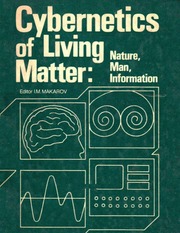
Cybernetics Of Living Matter: Nature, Man and Information
The book has been written by a team of leading
Soviet authorities in the field of cybernetics,
among them Academicians Yu. Ovchinnikov,
A. Baev, V. Afanasyev, P. Anokhin, A. Migdal,
Yu. Gulyaev.
The contributors...

Genealogy of the Martin family
2 v. 23 cm Vol. 2 by A.B. Shedd

# THE LUCIFERIAN DOCTRINE BOOK TRILOGY
THE-LUCIFERIAN-DOCTRINE%^ACHIEVE.!EVERYTHING.THAT.YOU.TRULY.@DESIRE | You #Enslave or are-Enslaved.https://play.google.com/store/books/details/My_Female_Slave_book?id=mj5nDwAAQBAJ$1st FREE BOOK: https://drive.google.c...

المختصر في تفسير القرآن الكريم
كتاب المختصر في تفسير القرآن الكريم - الطبعة الخامسةمركز تفسير للدراسات القرآنية

23 SCIENCE FICTION BOOKS - ARTHUR CLARKE
SCIENCE FICTION

@.SLAVE-TECHNOLOGY-THE.LUCIFERIAN.DOCTRINE,MY.FEMALE.SLAVE
SLAVE TECHNOLOGY; THE LUCIFERIAN DOCTRINE/ MY .FEMALE SLAVEView. https://drive.google.com/file/d/1kes_eIbXPBjyW6pOFeplte6BWdrxbi8x/view / .for+#you /--- \ .to: _.@Cause a #female: .to-have #n0-Control over #her+Mind &...