
Exploring literature : writing and arguing about fiction, poetry, drama, and the essay
xxxiv, 1355 pages : 24 cm From the Publisher: With engaging selections, provocative themes, and comprehensive coverage of the writing process, Exploring Literature combines practical writing instruction with a carefully selected anthology of classic and contemporary literature from around the world. This new edition weaves critical thinking into every facet of its writing apparatus while guiding you through the process of crafting personal responses into persuasive arguments. The five opening chapters are dedicated to reading, writing, arguing, and researching about literature. Following the opening chapters is an anthology, divided into five thematically-arranged sections that include contextual case studies, writing prompts, and sample student essays to help you approach literature with a critical eye and write thoughtful essays. Exploring Literature assembles stimulating literature and structured advice to create a valuable guide that will not only help you to write about literature, but to improve your writing and thinking processes in general Includes indexes Includes bibliographical references and index Alternate contents by genre -- Preface to instructors -- About the author -- Part 1: Making Connections -- 1: Participation: personal response and critical thinking -- Personal dimension of reading literature -- Personal response and critical thinking -- Writing to learn -- Your first response -- Checklist: Your first response -- Keeping a journal or reading log -- Double-entry journals and logs -- Social nature of learning: collaboration -- Personal, not private -- Ourselves as readers -- Different kinds of reading -- Advice to my son / Peter Meinke -- Making connections with literature -- Images of ourselves -- Connecting through experience -- Zimmer in grade school / Paul Zimmer -- Culture, experience, and values -- Connecting through experience -- Those winter Sundays / Robert Hayden -- Connecting through experience -- Barbie doll / Marge Piercy -- Being in the moment -- Birmingham bomb kills / New York Times -- Ballad of Birmingham / Dudley Randall -- Participating, not solving -- Using our imaginations -- Whole and its parts -- 2: Communication: writing a response essay -- Response essay -- Checklist: Basics of a response essay -- Voice and writing -- Voice and response to literature -- Connecting through experience -- Incident / Countee Cullen -- Writing to describe -- Choosing details -- Choosing details from literature -- Connecting through experience -- Eleven / Sandra Cisneros -- Writing to compare -- Comparing and contrasting using a Venn diagram -- Connecting through experience -- Mothers / Anna Quindlen -- Connecting through experience -- Salvation / Langston Hughes -- Possible worlds -- From first response to final draft -- Importance of revision -- Using first or third person in formal essays -- Step 1: Using your first response -- Choosing a topic -- Brainstorming -- Semantic mapping or clustering -- Mix and match -- Generating ideas through collaboration -- Step 2: Composing a draft -- Developing a thesis statement -- Checklist: Thesis statement -- Writing effective paragraphs -- Checklist: Paragraphs -- Dierdre's draft -- Step 3: Revising the essay -- Checklist: Revision -- Revising Dierdre's draft -- Formatting and documenting your essay -- Checklist: Basics for a literary essay -- Checklist: Editing and proofreading -- Step 4: Dierdre's revised essay -- Part 2: Analysis, Argumentation, And Research -- 3: Exploration and analysis: genre and the elements of literature -- Close reading -- Annotating the text -- First annotation: Exploration -- Ozymandias / Percy Bysshe Shelley -- Second annotation: Analysis -- Literature in its many contexts -- Your critical approach -- Reading and analyzing fiction --Narration -- Point of view -- Setting -- Conflict -- Plot -- Character -- Language and style -- Diction -- Symbol -- Irony -- Theme -- Checklist: Analyzing fiction -- Getting ideas for writing about fiction -- Story of an hour / Kate Chopin -- Reading and analyzing poetry -- Language and style -- Denotation and connotation -- Voice -- Tone -- Irony -- War is kind / Stephen Crane -- Imagery -- Word plum / Helen Chasin -- Meeting at night -- Parting at Morning / Robert Browning -- Figurative language: Everyday poetry -- Dream deferred / Langston Hughes -- Simile / N Scott Momaday -- Fog / Carl Sandburg -- Wind / James Stephens -- Symbol -- Road not taken / Robert Frost -- Sound and structure -- Alliteration, assonance and rhyme -- Rhyme and rhythm: limerick -- Meter -- Formal verse: Sonnet -- Sonnet no 29 / William Shakespeare -- Blank verse -- Free or open form verse -- When I heard the learn'd astronomer / Walt Whitman -- Interpretation: what does the poem mean? -- Explication -- Types of poetry -- Lyric poetry -- Narrative poetry -- Checklist: Analyzing poetry -- Getting ideas for writing about poetry -- Pigeon woman / May Swenson -- Reading and analyzing drama -- Reading a play -- Point of view -- Set and setting -- Conflict -- Plot -- Poetics -- Tragedy -- Comedy -- Characterization -- Language and style -- Diction -- Symbol -- Irony -- Theme -- Periods of drama: a brief background -- Greek drama -- Shakespearean drama -- Tips on reading the language of Shakespeare -- Modern drama -- Checklist: Analyzing drama -- Getting ideas for writing about drama -- Tips on reading Antigone -- Antigone / Sophocles -- Reading and analyzing essays -- Types of essays -- Narrative -- Expository -- Argumentative -- Language, style, and structure -- Formal or informal -- Voice -- Irony -- Word choice and style -- Theme: what's the point? -- Aims of an essay: inform, preach, or reveal -- Checklist: Analyzing essays -- Getting ideas for writing about the essay -- Mother tongue / Amy Tan -- 4: Argumentation: writing a critical essay -- Critical essay -- Suzanne's response to Antigone -- Interpretation and evaluation -- Interpretation: what does it mean? -- Evaluation: how well does it work? -- Options for a critical essay: process and product -- Checklist: Options for a critical essay -- Analytical essay -- Comparative essay -- Thematic essay -- Philosophical or ethical evaluation -- Contextual essay -- Argumentation: writing a critical essay -- Other models: classical, Toulmin, and Rogerian -- Shape of an argument -- Checklist: Writing a critical essay -- Planning your argument -- Supporting your argument: induction and substantiation -- Opening, closing, and revising your argument -- Development of a critical essay -- Step 1: Using your first response -- Step 2: Composing a draft -- Suzanne's draft -- Step 3: Revising the essay -- Step 4: Suzanne's revised essay -- 5: Research: writing with secondary sources -- Research essay -- Creating, expanding, and joining interpretive communities -- It is your interpretation -- Getting started -- Choosing a topic -- Some popular areas of literary research -- Your search -- Peer support -- Library -- Reference works -- Some other encyclopedias and indexes useful for literary research -- Some bibliographies, indexes, and abstracts useful for literary research -- Finding sources on the internet -- Evaluating internet sources -- Checklist: Evaluating internet sources -- Taking notes -- Integrating sources into your writing -- What must be documented -- Where and how -- Paraphrasing and summarizing -- Quoting -- Avoiding plagiarism -- Examples of paraphrasing, summarizing, quoting, and plagiarizing -- From first response to research essay -- Checklist: Writing a research essay -- Case Study In Research: James Joyce and "Eveline" -- Step 1: Using your first respose -- Eveline / James Joyce -- Step 2: Composing a draft -- Professor Devenish's commentary -- Kevin's motivation and process -- Step 3: Revising the essay -- Step 4: Kevin's revised essay Part 3: Thematic Anthology -- Family And Friends -- Dialogue across history -- Family and friends: exploring your own values and beliefs -- Reading and writing about family and friends -- Fiction -- Connecting through comparison: Sibling relationships -- Sonny's blues / James Baldwin -- Red convertible / Louise Erdrich -- Other stories -- Marriage is a private affair / Chinua Achebe -- Reunion / John Cheever -- Road / Linda Ching Sledge -- Connecting through comparison: Parents and children -- Two kinds / Amy Tan -- Poetry -- Dusting / Julia Alvarez -- For my father / Janice Mirikitani -- My papa's waltz / Theodore Roethke -- Youngest daughter / Cathy Song -- Other poems -- Siren song / Margaret Atwood -- Faces / John Ciardi -- Mending wall / Robert Frost -- Digging / Seamus Heaney -- This be the verse / Philip Larkin -- Gift / Li-Young Lee -- 35/10 / Sharon Olds -- Friends / William Stafford -- Connecting through comparison: Remembrance -- Losses that turn up in dreams / Elizabeth Gaffney -- When to the sessions of sweet silent thought (sonnet no 30) / William Shakespeare -- Drama -- Glass menagerie / Tennessee Williams -- Essays -- Inspired eccentricity / Bell Hooks -- Friendship's gift / Christine O'Hagan -- Case Study In Biographical Context: Lorraine Hansberry and a Raisin in the sun -- Raisin in the sun / Lorraine Hansberry -- Lorraine Hansberry-in her own words -- In others' words -- Sweet Lorraine / James Baldwin -- Heroic dimension in a Raisin in the sun / Julius Lester -- African heritage in a Raisin in the sun / Anne Cheney -- Hansberry's artistic misstep / Steven R Carter -- Hansberry's awareness of culture and gender / Margaret B Wilkerson -- Raisin in the sun: a landmark lesson in being black / Michael Anderson -- Student's research essay -- Exploring the literature of family and friends: options for making connections, building arguments, and using research -- Writing about connections across themes -- Collaboration: Writing and revising with your peers -- Writing/research portfolio option Innocence and experience -- Dialogue across history -- Innocence and experience: Exploring your own values and beliefs -- Reading and writing about innocence and experience -- Fiction -- Connecting through comparison: Illusion and disillusion -- Stolen party / Liliana Heker -- Araby / James Joyce -- Other stories -- Snow / Julia Alvarez -- Lesson / Toni Cade Bambara -- Myth of Daedalus and Icarus / Thomas Bulfinch -- Battle royal / Ralph Ellison -- On seeing the 100% perfect girl one beautiful April morning / Haruki Murakami -- Where are you going, where have you been? / Joyce Carol Oates -- Guests of the nation / Frank O'Connor -- Two readers-two different views: exploring A & P and making connections -- A & P / John Updike -- Two students essays-two different views -- Poetry -- Connecting Through Comparison: the city -- London / William Blake -- Composed upon Westminster Bridge, September 3, 1802 / William Wordsworth -- Connecting through comparison: the Chimney sweepers -- Chimney Sweeper The (from Songs of innocence) / William Blake -- Chimney sweeper (from Songs of experience) -- Other Poems -- When I was one-and-twenty / A E Housman -- In second grade Miss Lee I promised never to forget you and I never did / Alberto Rios -- Richard Cory / Edwin Arlington Robinson -- Pain for a daughter / Anne Sexton -- There was a child went forth / Walt Whitman -- Wayfarer / Stephen Crane -- Connecting through comparison: Death of a child -- Out, out / Robert Frost -- Mid-term break / Seamus Heaney -- Essays -- Hurricane Katrina: the corpse on Union Street / Dan Barry -- I fell in love, or my hormones awakened / Judith Ortiz Cofer -- Learning curve / David Sedaris -- Case study in theatrical context -- Hamlet and performance -- Interpretation and performance -- Multiple interpretations of Hamlet -- Hamlet, Prince of Denmark / William Shakespeare -- Desperately seeking Hamlet: four interpretations -- Olivier's Hamlet -- Jacobi's Hamlet -- Gibson's Hamlet -- Branagh's Hamlet -- From part to whole, from whole to part -- Student's critical essay-an explication and analysis of the "To be, or not to be" Soliloquy -- Critic's influential interpretation -- Hamlet's Oedipus complex / Ernest Jones -- Hamlet on screen -- BBC Hamlet / Bernice Kliman -- Playing Gertrude on television / Claire Bloom -- Branagh's Hamlet / Stanley Kauffmann -- Film diary of the shooting of Kenneth Branagh's Hamlet / Russell Jackson -- Exploring the literature of Innocence and experience: Options for making connections, building arguments, and using research -- Writing about connections across themes -- Collaboration: writing and revising with your peers -- Writing/research portfolio option -- Case study in aesthetic context -- Poetry and painting -- Making connections with painting and poetry -- Landscape with the fall of Icarus / Pieter Brueghel -- Musee des Beaux arts / W H Auden -- Icarus again / Alan Devenish -- Crucifixion / Jacopo Tintoretto -- Before an old painting of the Crucifixion / N Scott Momaday -- Nighthawks / Edward Hopper -- Nighthawks / Samuel Yellen -- Starry night / Vincent Van Gogh -- Starry night / Anne Sexton -- Dance / Henri Matisse -- Matisse's dance / Natalie Safir -- Two women dressing their hair / Kitagawa Utamaro -- Beauty and sadness / Cathy Song -- Mourning picture / Edwin Romanzo Elmer -- Mourning picture / Adrienne Rich -- Loveletter / Jan Vermeer -- When a woman holds a letter / Sandra Nelson -- Student's comparison and contrast essay: process and product -- Exploring poetry and painting: options for making connections, building arguments, and using research -- Women and men -- Dialogue across history -- Women and men: Exploring your own values and beliefs -- Reading and writing about women and men -- Fiction -- Jealous husband returns as a parrot / Robert Olsen Butler -- Yellow wallpaper / Charlotte Perkins Gilman -- Hills like white elephants / Ernest Hemingway -- Horse dealer's daughter / D H Lawrence -- Shiloh / Bobbie Ann Mason -- Day it happened / Rosario Morales -- Two / Gloria Naylor -- Poetry -- Connecting through comparison: Be my love -- Passionate shepherd to his love / Christopher Marlowe -- Nymph's reply to the shepherd / Walter Raleigh -- To his coy mistress / Andrew Marvell -- Other poems -- Phenomenal woman / Maya Angelou -- You fit into me / Margaret Atwood -- How do i love thee? / Elizabeth Barrett Browning -- Porphyria's lover / Robert Browning -- Woman / Nikki Giovanni -- Ella, in a square apron, along highway 80 / Judy Grahn -- Wedding couple / Donald Hall -- Commitments / Essex Hemphill -- How to watch your brother die / Micheal Lassell -- What lips my lips have kissed, and where, and why -- Love is not all / Edna St Vincent Millay -- Sex without love / Sharon Olds -- Two bodies / Octavio Paz -- Mirror / Sylvia Plath -- Connecting through comparison: Shall I compare thee? Shall I compare thee to a summer's day? (Sonnet No. 18) -- My mistress' eyes are nothing like the sun (sonnet no. 130) / William Shakespeare -- Shall I compare thee to a summer's day? / Howard Moss -- Connecting and comparing across genres: Cinderella -- Cinderella / Jacob Ludwig Carl Grimm And Wilhelm Carl Grimm -- Cinderella / Anne Sexton -- Cinderella / Bruno Bettelheim -- Drama -- Proposal / Anton Chekhov -- Connecting and comparing across genres: Fiction and drama -- Trifles -- Jury of her peers / Susan Glaspell -- Essays -- Opposite sex / Steven Doloff -- If Shakespeare had a sister / Virginia Woolf Case study in historical context -- Women in culture and history -- Doll's house / Henrik Ibsen -- Adams letters -- Husband's letter to his wife -- Ain't I a woman / Sojourner Truth -- Notes for the modern tragedy / Henrik Ibsen -- Changed ending of a Doll's House for a German production -- Speech at the banquet of the Norwegian league for women's rights -- Excerpt from "Solitude of self" / Elizabeth Cady Stanton -- Excerpt from "Southern womanhood" / Wilbur Fisk Tillett -- American wife -- Women and suicide / Dorothy Dix -- Excerpt from "Women and economics" / Charlotte Perkins Stetson (Gilman) -- Rest of the story / Natalie Zemon Davis and Jill Ker Conway -- Student's response essay -- Exploring the Literature of Women and men: Options for making connections, building arguments, and using research -- Writing about connections across themes -- Collaboration: Writing and revising with your peers -- Writing/research portfolio option -- Culture and identity -- Dialogue across history -- Culture and identity: Exploring your own values and beliefs -- Reading and writing about culture and identity -- Fiction -- El Tonto del Barrio / Jose Armas -- Desiree's baby / Kate Chopin -- Rose for Emily / William Faulkner -- Girl / Jamaica Kincaid -- Borders / Thomas King -- Handsomest drowned man in the world / Gabriel Garcia Marquez -- Brave we are / Tahira Naqvi -- Everyday use / Alice Walker -- Poetry -- Connecting through comparison: Mask we wear -- Unknown citizen / W H Auden -- We wear the mask / Paul Laurence Dunbar -- Love song of J Alfred Prufrock / T S Eliot -- Other poems -- Evolution / Sherman Alexie -- To live in the Borderlands means you / Gloria Anzaldua -- In the waiting room / Elizabeth Bishop -- We real cool / Gwendolyn Brooks -- Anyone lived in a pretty how town / E E Cummings -- Coca-Cola and Coco Fria / Martin Espada -- Connecting through comparison: Immigration -- New colossus / Emily Lazarus -- Learning to love America / Shirley Geock-Lin Lim -- Immigrants / Pat Mora -- Ex-basketball player / John Updike -- At the ball game / William Carlos Williams -- Lake Isle of Innisfree / William Butler Yeats -- Connecting through comparison: What is poetry? -- Ars poetica / Archibald Macleish -- Constantly risking absurdity / Lawrence Ferlinghetti -- Introduction to poetry / Billy Collins -- Drama -- Oedipus Rex / Sophocles -- Los Vendidos / Luis Valdez -- Essays -- Connecting through comparison: Work and identity -- Workers / Richard Rodriguez -- To be of use / Marge Piercy -- Other Essays -- Why I write / Joan Didion -- Learning to read and write / Frederick Douglass -- I have a dream / Martin Luther King, Jr -- Playing indian: why Native American mascots must end / Charles Fruehling Springwood and C Richard King -- Modest proposal / Jonathan Swift -- From Civil disobedience / Henry David Thoureau -- Case study in cultural context -- Writers Of The Harlem Renaissance -- New Negro / Alain Locke -- From the "Big sea" -- Negro artist and the racial mountain -- Negro speaks of rivers -- I, too -- Weary blues -- One Friday morning -- Theme for English B / Langston Hughes -- America / Claude Mckay -- Heritage / Gwendolyn B Bennett -- Reapers / Jean Toomer -- Yet do I marvel -- From the Dark tower / Countee Cullen -- Lady, lady / Anne Spencer -- I want to die while you love me / Georgia Douglas Johnson -- Sweat / Zora Neale Hurston -- Commentary on "the Negro speaks of rivers" -- Langston Hughes -- Jessie Fauset -- Onwuchekwa Jemie -- R Baxter Miller -- Zora Neale Hurston: a cautionary tale and a Partisan view / Alice Walker -- Student's critical essay -- Exploring the literature of culture and identity: Options for making connections, building arguments, and using research -- Writing about connections across themes -- Collaboration: Writing and revising with your peers -- Writing/research portfolio option Faith and doubt -- Dialogue across history -- Faith and doubt: Exploring your own values and beliefs -- Reading and writing about faith and doubt -- Fiction -- Cathedral / Raymond Carver -- Young Goodman Brown / Nathaniel Hawthorne -- Things they carried / Tim O'Brien -- Good man is hard to find / Flannery O'Connor -- Chrysanthemums / John Steinbeck -- Poetry -- Connecting through comparison: Facing our own mortality -- Death, be not proud / John Donne -- When I have fears that I may cease to be / John Keats -- When death comes / Mary Oliver -- Connecting through comparison: Nature and humanity -- Dover beach / Matthew Arnold -- London snow / Robert Bridges -- Fire and ice / Robert Frost -- Saint Francis and the sow / Galway Kinnell -- Traveling through the dark / William Stafford -- Song of myself 6 / Walt Whitman -- Connecting through comparison: September 11, 2001 -- I saw you walking / Deborah Garrison -- Leap / Brian Doyle -- Names / Billy Collins -- Connecting through comparison: Belief in a supreme being -- Man said to the universe / Stephen Crane -- Hap / Thomas Hardy -- Connecting through comparison: Impact of war -- Man he killed / Thomas Hardy -- Dulce et Decorum est / Wilfred Owen -- Grass / Carl Sandburg -- Facing it / Yusef Komunyakaa -- Connecting through comparison: Responding to the deaths of others -- Brilliance / Mark Doty -- To an athlete dying young / A E Housman -- Dead woman / Pablo Neruda -- Do not go gentle into that good night / Dylan Thomas -- Drama -- Oleanna / David Mamet -- Riders to the sea / John Millington Synge -- Essays -- Myth of Sisyphus / Albert Camus -- Allegory of the cave / Plato -- Learning to fall / Philip Simmons -- Case study in contextual context -- Poetry of Emily Dickinson -- Her life -- Her work -- Poems -- Success is counted sweetest -- Faith is a fine invention -- There's a certain slant of light -- I like a look of agony -- Wild nights-wild nights! -- Brain-is wider than the sky -- Much madness is divinest sense -- I've seen a dying eye -- I heard a fly buzz-when I died -- After great pain, a formal feeling comes -- Some keep the Sabbath going to church -- This world is not conclusion -- There is a pain-so utter -- Because I could not stop for death -- Bustle in a house -- Tell all the truth but tell it slant -- Emily Dickinson-in her own words -- To Susan Gilbert (Dickinson) (1852) -- To T W Higginson (1862) -- In others' words -- On meeting Dickinson for the first time (1870) / Thomas Wentworth Higginson -- Character of Amherst (1881) / Mabel Loomis Todd -- On Dickinson's sense of privation (1960) / Richard Wilbur -- On Dickinson's white dress (1979) / Sandra M Gilbert and Susan Gubar -- Critical commentary on her poetry -- Dickinson's method / Helen McNeil -- On the many voices in Dickinson's poetry / Cynthia Griffin Wolff -- On "Because I could not stop for death" / Allan Tate -- On "I heard a fly buzz-when I died" / Paula Bennett -- Poems about Emily Dickinson -- Emily Dickinson / Linda Pastan -- Taking off Emily Dickinson's clothes / Billy Collins -- Student's critical essay -- Exploring the literature of faith and doubt: Options for making connections, building arguments, and using research -- Using research -- Writing about connections across themes -- Collaboration: Writing and revising with your peers -- Writing/research portfolio option -- Appendix A: Critical approaches to literature -- Appendix B: Writing about film -- Appendix C: Documentation -- Glossary of literary terms -- Literary and photo credits -- Index of author names, titles, and first lines of poems -- Index of terms
نسخة ورقية
كتب أخرى
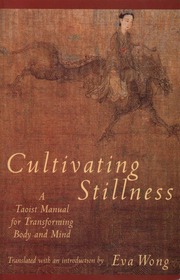
Cultivating Stillness: A Taoist Manual for Transforming Body and Mind
Cultivating Stillness: A Taoist Manual for Transforming Body and Mind, translated and edited by Eva Wong, is available here in PDF format. Book Description: Equanimity, good health, peace of mind, and long life are th...

Worked Problems In Applied Mathematics
The aim of the present book is to ‘help the reader acquirethe proficiency needed to successfully apply themethods of mathematical physics to a variety of problemsdrawn from mechanics, the theory of heat conduction,and...

Computerized Criminal History (CCH): Fully-Automatic Justice
Using CCH cohort samples to predict Homeland Security Threat Management systems target identification criteria."If I could slip the sickly ties that earthly man has madeAnd now every mother can choose the colorOf her ...

ERIC ED362878: Adventuring with Books: A Booklist for Pre-K-Grade 6. Tenth Edition. NCTE Bibliography Series.
Designed to help teachers, librarians, and parents introduce books of exceptional literary and artistic merit, accuracy, and appeal to preschool through sixth grade children, this annotated bibliography presents nearl...

Collectanea de rebus hibernicis
Book digitized by Google from the library of the University of Michigan and uploaded to the Internet Archive by user tpb. 6 volumes 22 cm Vol. 5 pub. by R. Marchbank; vol. 6, Graisberry and Campbell v. 1 no. 1. Piers,...

الشيخ عبد الله شحاتة علوم التفسير
الشيخ عبد الله شحاتة الشيخ عبد الله شحاته الشيخ عبد الله شحادة الشيخ عبد الله شحاده كتب اسلامية كتب إسلامية كتب دينية كتاب اسلامى كتاب اسلامي كتاب دينى كتاب ديني كتاب إسلامى كتاب إسلامي