
Patterns Of Software
In our homes, our schools, and our businesses, computers play an ever-increasing role. But while most of us today can work a computer--albeit with the help of the ever-present computer software manual--we know little about what goes on inside the box and virtually nothing about software design or the world of computer programming.In Patterns of Software, the respected software pioneer and computer scientist, Richard Gabriel, gives us an informative inside look at the world of software design and computer programming and the business that surrounds them. In this wide-ranging volume, Gabriel discusses such topics as what makes a successful programming language, how the rest of the world looks at and responds to the work of computer scientists, how he first became involved in computer programming and software development, what makes a successful software business, and why his own company, Lucid, failed in 1994, ten years after its inception.Perhaps the most interesting and enlightening section of the book is Gabriel's detailed look at what he believes are the lessons that can be learned from architect Christopher Alexander, whose books--including the seminal A Pattern Language--have had a profound influence on the computer programming community. Gabriel illuminates some of Alexander's key insights--"the quality without a name," pattern languages, habitability, piecemeal growth--and reveals how these influential architectural ideas apply equally well to the construction of a computer program. Gabriel explains the concept of habitability, for example, by comparing a program to a New England farmhouse and the surrounding structures which slowly grow and are modified according to the needs and desires of the people who live and work on the farm. "Programs live and grow, and their inhabitants--the programmers--need to work with that program the way the farmer works with the homestead."Although computer scientists and software entrepreneurs will get much out of this book, the essays are accessible to everyone and will intrigue anyone curious about Silicon Valley, computer programming, or the world of high technology.Archived by Unglue.it.
نسخة ورقية
كتب أخرى

Compute! Magazine Issue 120
Compute! Issue 20 - May 1990. Editorial License Programming is easier than ever and I can hack that - Impact Become the master of your computing environment - Gameplay Translating a computer game takes talent and dedi...

Retro Computer Game Design and Programming Books
A perpetual collection of retro computer videogame design and programming books.From ideas to actual pages of never-ending code to punch into vintage computers, you can make your own truly retro games!As more are coll...

PCMania 66
PCMania was a long-lived Spanish computer magazine. Unlike other magazines at the time, they covered a vast number of fields related to PCs such as gaming, technology previews, programming tutorials, etc. They also he...
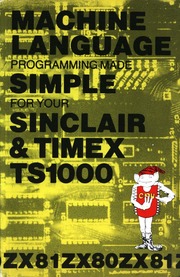
Machine Language Programming Made Simple
« "I wanted to review this book because I'm the person it was written for."I taught myself BASIC and can now do most of the things I want to with it. I felt that Machine Language would be a good addition to speed up s...

Python for everybody : exploring data using Python 3
xii, 235 pages : 25 cm "Designed to teach people to program even if they have no prior experience. ... Designed to introduce students to programming and software development through the lens of exploring data. You can...

The science fiction computer storybook
The Science Fiction Computer Storybook Twenty science fiction stories to read and program in BASIC on a home computer